#411 Mock Cancer Genetic Counseling Session: Colon Cancer and Lynch Syndrome
What happens during genetic counseling after someone develops colon cancer at a young age and their tumor testing raises concern for Lynch syndrome?
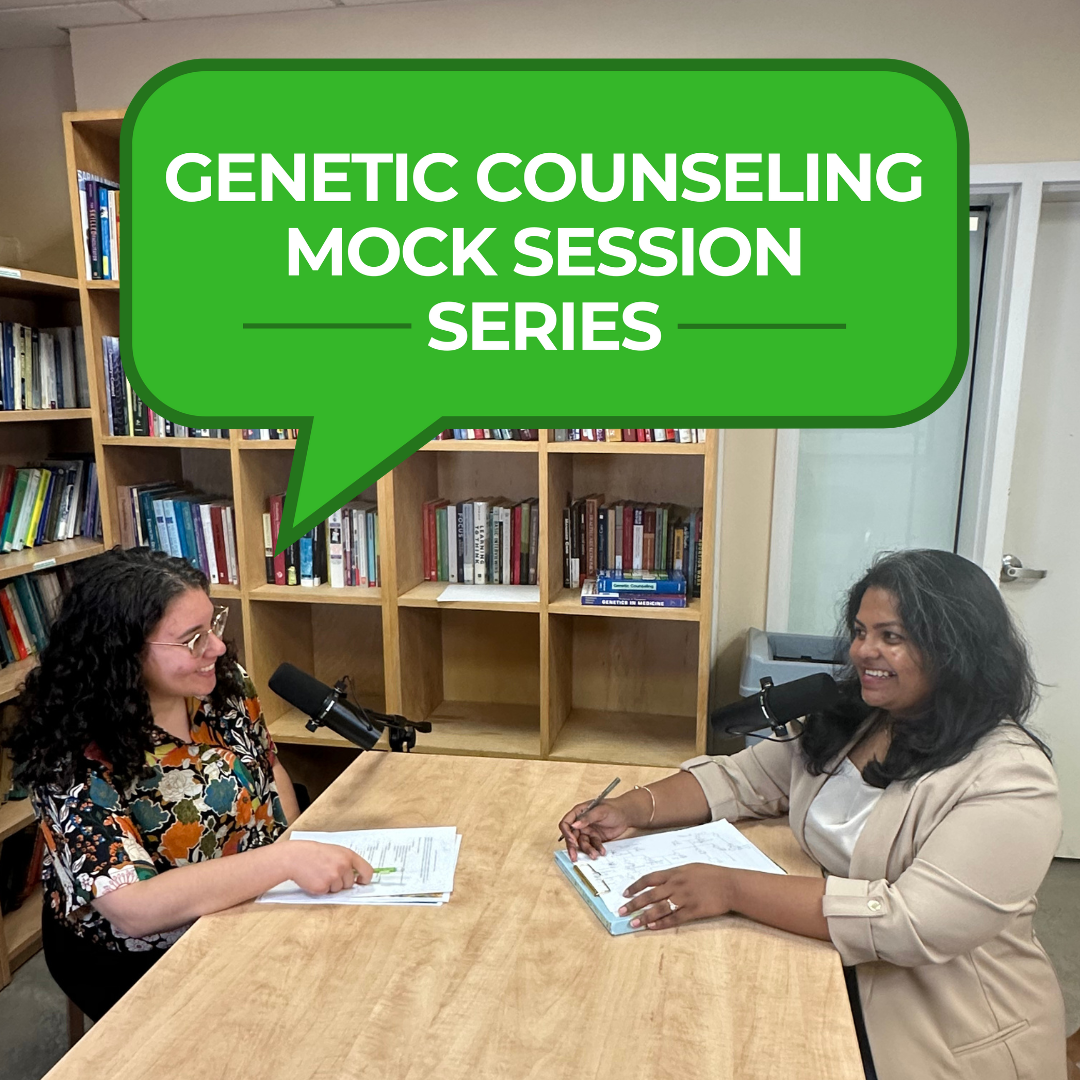
This is the eighth installment in our Mock Genetic Counseling Session Series! In this episode, cancer genetic counselor Connor Linehan and genetic counseling student Edith Atwerebour perform a mock cancer genetic counseling session. Edith plays Patricia, a 42-year-old woman recently diagnosed with Stage I colon cancer whose tumor showed loss of the MSH2 and MSH6 proteins.
Although this tumor result raises suspicion for Lynch syndrome, it does not confirm that Patricia has an inherited cancer predisposition. Through this simulated session, Connor explains the difference between tumor and germline testing, reviews the pattern of cancer in Patricia’s family, and discusses how genetic testing could inform her future medical care and clarify cancer risks for her relatives.
Patricia is particularly concerned about her kids. The session demonstrates how genetic counselors address the emotional impact of a possible hereditary cancer condition while explaining why testing and cancer screening are generally not recommended for children when the associated risks begin in adulthood.
Previous installments of this series have explored prenatal, pediatric, cardiovascular, cancer, and teratogen genetic counseling. We hope these sessions help prospective and current genetic counseling students, and the general public, better understand what happens during a genetic counseling appointment.
The Actors
Connor Linehan, MS, LCGC is a board-certified genetic counselor in Connecticut specializing in cancer. He helps patients and families understand inherited cancer risks, genetic testing options, and how test results may affect medical management and relatives. He is also a Clinical Instructor at a genetic counseling graduate program. Connor is the President of The Connecticut Genetic Counselor Association. (Fun fact, our host Kira Dineen designed this new website!)
Edith Atwerebour, MPH is currently a student in the Human Genetics Program at Sarah Lawrence College training to become a genetic counselor. In this mock session, she plays Patricia, a 42-year-old woman recently diagnosed with Stage I colon cancer whose abnormal tumor testing raises concern for Lynch syndrome. The premise of this mock case was developed as part of Atwerebour’s internship with DNA Today.
Edith also appeared in the previous installment of this series, #406 Mock Teratogen Genetic Counseling Session: Ozempic, Zoloft, Xanax, and Metformin, in which she played Denise, a pregnant patient seeking information about several medication exposures.
Mock Session Overview
Establishing the purpose and structure of a cancer genetic counseling appointment
Reviewing Patricia’s colon cancer diagnosis, treatment, and current health
Addressing Patricia’s concerns about her children early in the session
Constructing and evaluating a three-generation cancer family history
Identifying features that raise concern for hereditary cancer, including colon cancer before age 50 and multiple Lynch-associated cancers
Explaining how genes normally help protect the body from developing cancer
Sporadic, familial, and hereditary explanations for cancer
The function of the mismatch repair genes MLH1, MSH2, MSH6, and PMS2
How immunohistochemistry evaluates mismatch repair protein expression in a tumor
Why loss of MSH2 and MSH6 raises concern for mutations (pathogenic variants) in cancer genes
The difference between tumor testing and germline genetic testing
Why abnormal tumor testing does not independently establish a Lynch syndrome diagnosis
How genetic changes confined to a tumor differ from inherited germline variants
Why Patricia is the most informative person in her family to test first
The option of using a multigene hereditary cancer panel
Possible genetic testing results: positive, negative, and a variant of uncertain significance
What each potential result could mean for Patricia and her relatives
Why inheriting a pathogenic variant increases cancer risk but does not guarantee cancer
Why Patricia’s children would generally wait until adulthood for genetic testing
How a positive result could affect Patricia’s colon cancer surveillance
Other Lynch-associated cancer risks, including endometrial, ovarian, gastric, pancreatic, urinary tract, and additional cancers
How screening and risk-reducing options vary by the gene involved
Cascade testing for Patricia’s mother, children, and other relatives if a familial variant is identified
Genetic testing through a blood or saliva sample
The expected turnaround time and how results would be reviewed
Patricia’s decision about whether to proceed with germline genetic testing
Lynch Syndrome Resources
About Lynch Syndrome—Centers for Disease Control and Prevention
Genetic Testing for Lynch Syndrome—Centers for Disease Control and Prevention
Managing Cancer Risks Associated With Lynch Syndrome—Centers for Disease Control and Prevention
American Cancer Society: Genetic Testing, Screening, and Prevention for Colorectal Cancer
Find a Genetic Counselor—National Society of Genetic Counselors
Relevant DNA Today Podcast Episodes
#57 Georgia Hurst on Lynch Syndrome — Patient advocate Georgia Hurst shares her experience with Lynch syndrome, genetic testing, risk-reducing surgery, and hereditary cancer advocacy.
#43 Lynch Syndrome — Explore the genes associated with Lynch syndrome, related cancer risks, inheritance, genetic testing, and risk-reduction options.
#25 Interview with Hereditary Cancer Experts — Georgia Hurst, Amy Byer Shainman, and Ellen Matloff discuss Lynch syndrome, hereditary breast and ovarian cancer, and other hereditary cancer syndromes, patient advocacy, and the importance of genetic counseling.
#291 AFAP with Advocate Dan “Dry Dock” Shockley — Dan Shockley shares his experience with attenuated familial adenomatous polyposis (aFAP), colonoscopy screening, genetic testing, and continuing Dr. Henry Lynch’s legacy.
#311 Mock Cancer Genetic Counseling Session — The first installment in this series demonstrates cancer genetic counseling for an unaffected patient with a family history of breast, ovarian, pancreatic, and prostate cancers.
Previous Installments of Our Mock Genetic Counseling Session Series
Episode #311: Cancer Session for Breast and Prostate Cancer Family History
Episode #317: Prenatal Session for Advanced Maternal Age
Episode #331: Pediatric Session for Autism
Episode #351: Cardio Session for Sudden Death of a Family Member
Episode #368: Prenatal Session for Increased Nuchal Translucency
Episode #373: Pediatric Session for an Abnormal Cystic Fibrosis Newborn Screening Result
Episode #406: Prenatal Session for Medications/Teratogens during Pregnancy (Ozempic, Zoloft, Xanax, and Metformin)
Disclaimer
Please note that the information provided in this mock genetic counseling session is intended strictly for educational purposes and should not be used for personal medical decision-making. Cancer risks, screening recommendations, and risk-reducing options vary based on the individual, gene, personal medical history, and family history.
If you have questions or concerns about your health, we encourage you to consult directly with a certified genetic counselor or another qualified healthcare provider who can provide individualized medical recommendations. If you are in the United States, you can find a genetic counselor near you by visiting FindAGeneticCounselor.com. If you are a genetic professional yourself and looking for a a colleague outside the US, we recommend GlobalGeneticsDirectory.org
Connect with DNA Today
You never have to wait long for a new episode of DNA Today, we release episodes every Friday! In the meantime, explore our library of over 400 episodes on Apple Podcasts, Spotify, DNAToday.com, or wherever you listen to podcasts. Just search “DNA Today.”
Prefer to watch? The video version of this episode is available on our YouTube channel and DNAToday.com. Select episodes are filmed in person, including some at the iconic NBCUniversal studios.
Discover more podcasts exploring genetics, genomics, medicine, and science from our network, Gene Pool Media: The Science Podcast Network.
DNA Today is hosted and executive produced by Kira Dineen, MS, LCGC, CG(ASCP)CM. Liv Davidson is our Social Media Lead and Eric Knaus is our Digital Marketing and Automation Lead.
Follow us at @DNATodayPodcast on all platforms including Instagram, X, BluSky, Threads, LinkedIn, Facebook, YouTube and our website, DNAToday.com.
Questions, partnership inquiries, and guest pitches can be sent to info@DNAToday.com.