#412 How Prenatal cfDNA Can Uncover Undiagnosed Maternal Cancer
Prenatal cell-free DNA screening is designed to assess a pregnancy for chromosome conditions; but in rare cases, it can reveal something entirely unexpected about the pregnant patient’s own health.
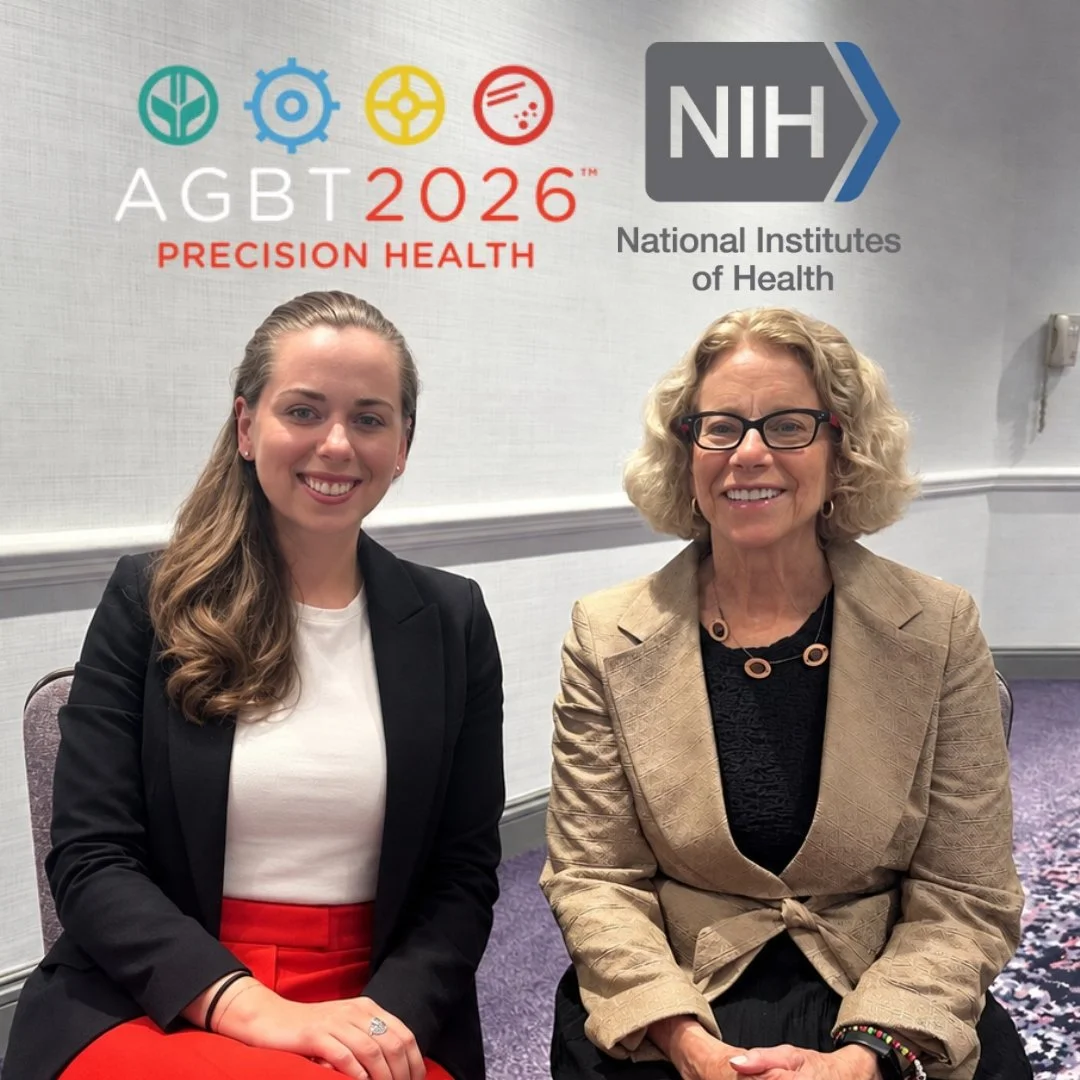
In this episode, Kira Dineen is joined in-person by Dr. Diana Bianchi to explore how unusual or non-reportable cfDNA screening results can sometimes be a signal of an undiagnosed maternal cancer.
Dr. Bianchi shares findings from the NIH’s ongoing IDENTIFY study, which is investigating why these unexpected cfDNA patterns occur, how clinicians can distinguish potential malignancy from other explanations, and what should happen next when a prenatal screening result raises concern about maternal cancer.
We recorded this episode in person at AGBT Precision Health, one of our favorite conferences of the year. The conference wrapped this past Wednesday and brought together leaders across genomics, precision medicine, research, and clinical care in an intimate setting that makes it easy to connect, learn, and have thoughtful conversations.
The conference is also hosted at a beautiful resort in the San Diego area, which makes the experience especially memorable. We highly recommend attending next year’s AGBT Precision Health meeting, taking place September 13–15, 2027, at the same gorgeous location. We already put it on our calendars!
Episode Discussion Topics:
What “non-reportable” or “uninterpretable” cfDNA results actually mean
How unusual cfDNA results differ from typical test failures
Determining whether an unexpected cfDNA signal originates from the fetus, placenta, or pregnant patient
Maternal causes of discordant cfDNA results, including fibroids, clonal hematopoiesis, a demised twin, and malignancy
Why tumors can release DNA into the bloodstream that is detected during prenatal screening
Why Dr. Bianchi and her colleagues launched the prospective IDENTIFY study in 2019
What participants undergo when they travel to the NIH Clinical Center for evaluation
Results from the first 107 IDENTIFY participants, including the 52 participants diagnosed with cancer
Why lymphoma is frequently identified through these unusual cfDNA patterns
Chromosomal patterns that are particularly suspicious for malignancy
Why gains and losses involving three or more chromosomes can be an important warning sign
Why symptoms, physical examinations, and routine bloodwork may not reliably identify patients with occult cancer
The role of rapid whole-body MRI in evaluating patients for malignancy
Approaches clinicians can consider when whole-body MRI is not readily available
Diagnosing and treating cancer during pregnancy
What researchers have learned from participants whose evaluation does not identify cancer
How the IDENTIFY study has expanded since its original published cohort
How laboratories should report cfDNA patterns that may suggest maternal malignancy
The need for professional society guidelines for clinicians receiving these unusual results
What genetic counselors, OB/GYNs, and maternal-fetal medicine specialists should do when they receive a concerning non-reportable NIPS result
About Dr. Diana Bianchi
Diana W. Bianchi, MD, is a physician-scientist and a pioneer in noninvasive prenatal genetic testing and fetal cell microchimerism research. She previously served as Director of the Eunice Kennedy Shriver National Institute of Child Health and Human Development at the National Institutes of Health and was a senior investigator in the Center for Precision Health Research at the National Human Genome Research Institute.
Her research has helped define how prenatal cell-free DNA sequencing can unexpectedly identify genomic patterns associated with maternal malignancy. In 2019, Dr. Bianchi and colleagues launched the IDENTIFY Study — Incidental Detection of Maternal Neoplasia Through Non-Invasive Cell-Free DNA Analysis — to investigate the biological causes of unusual or non-reportable prenatal cfDNA results and develop evidence-based approaches for identifying patients who may need evaluation for cancer.
IDENTIFY Study
The IDENTIFY study is an ongoing prospective study at the NIH Clinical Center evaluating pregnant and postpartum individuals who received unusual or non-reportable prenatal cfDNA sequencing results (also known as non-invasive prenatal screening or testing, NIPS or NIPT).
The first major results from IDENTIFY were published in The New England Journal of Medicine in December 2024. Among the first 107 participants evaluated, 52 (48.6%) were diagnosed with cancer.
Researchers also found:
Rapid whole-body MRI had 98% sensitivity and 88.5% specificity for detecting occult cancer.
Physical examination and routine laboratory testing had limited ability to distinguish participants with cancer.
Among participants whose research cfDNA sequencing showed both copy-number gains and losses involving three or more chromosomes, 47 of 49 (95.9%) had cancer.
Other unusual cfDNA patterns can have nonmalignant explanations, reinforcing that a non-reportable result does not automatically mean cancer.
Resources
Learn more about the ongoing Incidental Detection of Maternal Neoplasia Through Non-Invasive Cell-Free DNA Analysis study through the National Human Genome Research Institute.
Prenatal cfDNA Sequencing and Incidental Detection of Maternal Cancer
Turriff AE, Annunziata CM, Malayeri AA, et al. New England Journal of Medicine. Published December 2024.
Thalidomide changed our relationship with new medicines forever. It took five years for the connection between thalidomide taken by pregnant people and the impact on their children to be made including limb differences. Not only did thalidomide change people’s lives, but it resulted in tighter drug testing and reporting of side-effects and, as our guest Dr. Bianchi points out, more fear surrounding malpractice when treating people who are pregnant.
Our host Kira Dineen attended a session at one of the annual conferences where she learned more about the IDENTIFY Study. The 2026 conference will take place the evening of Thursday October 15th and all day Friday October 16th, join Kira by registering here. Disclaimer that Kira is on the Board of Directors and designed the new website, so this is a bias, but informed recommendation.
Once considered a disease of older age, colorectal cancer is rising at an alarming rate in younger adults. Today, 1 in 5 diagnoses occurs in someone under the age of 55 — and it has become a leading cause of cancer-related death in young people.
Pavlidis NA. Oncologist. 2002;7(4):279-87. Erratum in: Oncologist 2002;7(6):585. PMID: 12185292.
Chemotherapy safe during pregnancy in second and third trimesters.
Starr P. Value-Based Cancer Care. 2015 Nov;6(10).
Lenaerts L, Brison N, Maggen C, Vancoillie L, Che H, Vandenberghe P, Dierickx D, Michaux L, Dewaele B, Neven P, Floris G, Tousseyn T, Lannoo L, Jatsenko T, Bempt IV, Van Calsteren K, Vandecaveye V, Dehaspe L, Devriendt K, Legius E, Bogaert KVD, Vermeesch JR, Amant F. EClinicalMedicine. 2021 May 13;35:100856. doi: 10.1016/j.eclinm.2021.100856. PMID: 34036251; PMCID: PMC8138727.
We recorded this episode in person at AGBT Precision Health, which brings together leaders across genomics, precision medicine, research, and clinical care in an intimate setting that makes it easy to connect, learn, and have thoughtful conversations.
The conference is also hosted at a beautiful resort in the San Diego area, which makes the experience especially memorable. We highly recommend attending next year’s AGBT Precision Health meeting, taking place September 13–15, 2027, at the same gorgeous location.
Relevant DNA Today Episodes
#358 AGBT Precision Health 2025 Meeting Recaps and Reflections
Drs. Christine Eng, Eric Green, and Marina Sirota share highlights from last year’s AGBT Precision Health meeting, including advances in genomic medicine, rare disease diagnostics, and precision health.
#348 NIPT Beyond the Basics: Screening for Single-Gene Conditions
Dr. Fred Ushakov explores how noninvasive prenatal testing is evolving beyond traditional chromosome screening and the role of single-gene NIPT.
#224 Single-Gene Noninvasive Prenatal Testing (NIPT) with BillionToOne
Explore how cfDNA technology is being used to screen pregnancies for certain single-gene conditions.
#180 Reproductive DNA Testing with Mitera
This episode explores reproductive genetic testing, including carrier screening and cell-free DNA screening for common chromosome conditions during pregnancy.
#317 Prenatal Mock Genetic Counseling Session
Follow a mock prenatal genetic counseling appointment covering NIPS, diagnostic testing, ultrasound findings, and prenatal screening options.
#368 Mock Prenatal Genetic Counseling Session: Increased Nuchal Translucency
A mock genetic counseling session exploring an increased nuchal translucency finding, prenatal genetic testing options, and counseling after an abnormal ultrasound result.
Connect with DNA Today:
You never have to wait long for a new episode of DNA Today, we release episodes every Friday! In the meantime, explore our library of over 400 episodes on Apple Podcasts, Spotify, DNAToday.com, or wherever you listen to podcasts. Just search “DNA Today.”
Prefer to watch? The video version of this episode is available on our YouTube channel and DNAToday.com. Select episodes are filmed in person, including some at the iconic NBCUniversal studios.
Discover more podcasts exploring genetics, genomics, medicine, and science from our network, Gene Pool Media: The Science Podcast Network.
DNA Today is hosted and executive produced by Kira Dineen, MS, LCGC, CG(ASCP)CM. Liv Davidson is our Social Media Lead and Eric Knaus is our Digital Marketing and Automation Lead.
Follow us at @DNATodayPodcast on all platforms including Instagram, X, BluSky, Threads, LinkedIn, Facebook, YouTube and our website, DNAToday.com.
Questions, partnership inquiries, and guest pitches can be sent to info@DNAToday.com.