#416 How Baby KJ Became the First Patient Treated With Personalized CRISPR
CRISPR has carried enormous promise since scientists first realized its potential to edit the human genome, but it has also raised some of the biggest ethical questions in modern genetics.
In this episode, Kira Dineen sits down with Dr. Kiran Musunuru to trace the evolution of human gene editing, beginning with the controversial 2018 announcement that scientist He Jiankui had used CRISPR to edit human embryos in China, resulting in the birth of the world’s first gene-edited babies. The experiment, which targeted the CCR5 gene in an attempt to reduce susceptibility to HIV, sparked international condemnation and intensified debate over germline genome editing, where genetic changes could potentially be passed on to future generations.
From there, the conversation shifts to a dramatically different application of CRISPR: treating serious genetic disease in an individual patient.
Dr. Musunuru shares the remarkable story of Baby KJ, who was born with severe carbamoyl phosphate synthetase 1 (CPS1) deficiency and became the first patient to receive a personalized CRISPR-based therapy designed specifically for his genetic variant. The team developed KJ’s customized base-editing treatment in approximately six months, moving from identification of his variant through preclinical testing, manufacturing, regulatory review, and ultimately treatment.
Dr. Musunuru explains how KJ’s therapy works, what researchers have learned from his response so far, and whether his case could establish a new pathway for treating patients with ultra-rare genetic conditions who may never fit into a traditional drug-development model.
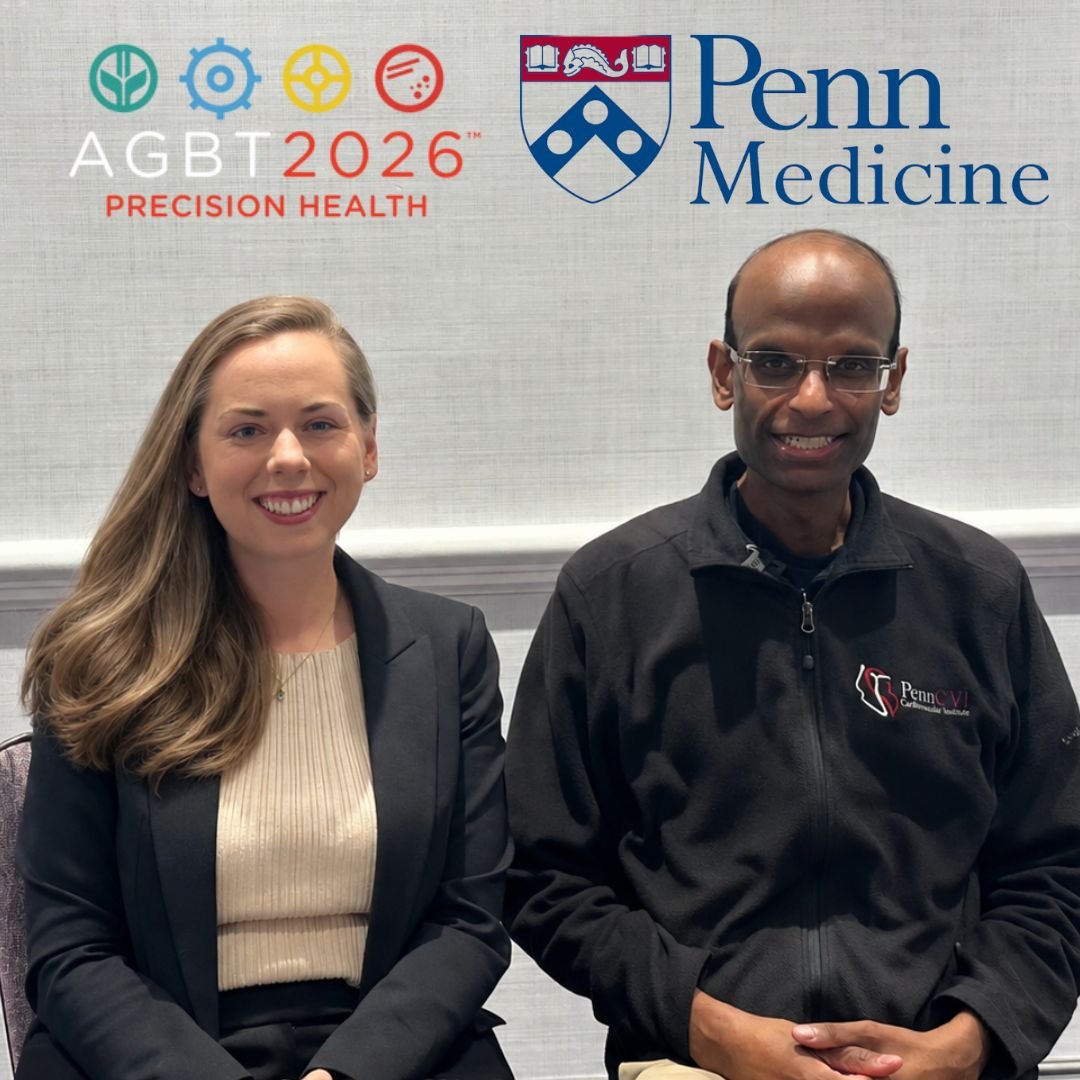
This interview was recorded in person at AGBT Precision Health in Coronado, California, we caught up with Dr. Musunuru after a presentation.
Episode Discussion Topics:
The 2018 announcement of the world’s first CRISPR-edited babies in China
Why He Jiankui’s experiment targeting the CCR5 gene sparked global scientific and ethical backlash
The difference between editing embryos and germline cells versus editing somatic cells in a patient
What the CRISPR babies controversy taught the scientific community about oversight, regulation, and responsible use of gene-editing technology
How the field of CRISPR medicine has evolved since 2018
What CPS1 deficiency is and why it can become life-threatening shortly after birth
How Baby KJ’s diagnosis created an opportunity to pursue a personalized gene-editing treatment
Why KJ’s specific genetic variant was a candidate for base editing
How base editing differs from traditional CRISPR approaches that make double-stranded breaks in DNA
Developing a gene-editing therapy specifically for a single patient
Delivering the gene editor to liver cells using lipid nanoparticles
Why the liver is an especially promising target for in vivo gene-editing therapies
The collaboration between researchers, clinicians, biotechnology companies, regulators, and KJ’s family that made the treatment possible
Navigating FDA review for a therapy that had never previously been given to a human
Why KJ received multiple doses of the therapy
Early signs that the treatment was having an effect, including increased dietary protein tolerance and reduced dependence on nitrogen-scavenging medication
Why researchers are careful not to describe KJ’s treatment as a cure
The importance of long-term monitoring for both effectiveness and potential safety concerns
Evaluating off-target editing and other potential risks of personalized gene-editing therapies
Whether creating an individual therapy for a single patient can realistically become scalable
Moving from an “N-of-1” treatment toward gene-editing platforms that could be adapted for multiple patients with different variants
How regulatory frameworks may need to evolve for personalized genetic medicines
Which other rare genetic diseases could potentially benefit from this approach
What Baby KJ’s story could mean for the future of precision medicine and gene editing
About Dr. Kiran Musunuru
Kiran Musunuru, MD, PhD, MPH, ML, MRA, is the Barry J. Gertz Professor for Translational Research at the Perelman School of Medicine at the University of Pennsylvania. He is Director of the Genetic and Epigenetic Origins of Disease Program within the Penn Cardiovascular Institute, Scientific Director of the Penn Center for Inherited Cardiovascular Disease, and Co-Director of the Penn Medicine/Children’s Hospital of Philadelphia Orphan Disease Center.
Dr. Musunuru is a practicing cardiologist and physician-scientist whose research focuses on using genetics and gene-editing technologies to develop new treatments for cardiovascular, metabolic, and rare genetic diseases.
He has also written extensively about the ethical and scientific implications of human genome editing, including the CRISPR babies controversy in his book The CRISPR Generation.
Along with Dr. Rebecca Ahrens-Nicklas and a large multidisciplinary team, Dr. Musunuru helped lead the development of the world’s first personalized CRISPR gene-editing therapy for Baby KJ. Their work was published in The New England Journal of Medicine in 2025.
Baby KJ and Personalized Gene Editing
KJ Muldoon was born with severe CPS1 deficiency, a rare urea cycle disorder caused by pathogenic variants in the CPS1 gene. Without adequate CPS1 enzyme activity, the body cannot efficiently process nitrogen generated from protein metabolism, which can lead to dangerously high ammonia levels.
Researchers designed a customized CRISPR base-editing therapy targeting KJ’s specific disease-causing variant. The editor was delivered to the liver using lipid nanoparticles.
KJ received multiple infusions of the personalized therapy. Researchers have reported that he has been able to consume more dietary protein, requires less nitrogen-scavenging medication, and has demonstrated improved metabolic stability. Researchers continue to monitor KJ closely to understand the therapy’s long-term safety, durability, and clinical benefit.
Resources
Patient-Specific In Vivo Gene Editing to Treat a Rare Genetic Disease
Musunuru K, et al. New England Journal of Medicine. Published May 2025.
The landmark publication describes the development and initial clinical results of KJ’s personalized base-editing therapy.
The CRISPR Generation: The Story of the World’s First Gene-Edited Babies
By Kiran Musunuru’s book that examines the science and ethical failures surrounding the creation of the first CRISPR-edited babies and what the case means for the future of human genome editing.
Children’s Hospital of Philadelphia: The Future of Personalized Medicine is Here: KJ’s Story
Learn more about KJ, his family, and the multidisciplinary team that developed his personalized treatment.
Penn Medicine: World’s First Patient Treated with Personalized CRISPR Gene Editing Therapy
Overview of the science behind the treatment and the collaboration required to bring it into the clinic.
Dr. Musunuru serves as Co-Director of the center, which works to advance research and therapeutic development for rare diseases.
We recorded this episode in person at AGBT Precision Health, which brings together leaders across genomics, precision medicine, research, and clinical care in an intimate setting that makes it easy to connect, learn, and have thoughtful conversations.
The conference is also hosted at a beautiful resort in the San Diego area, which makes the experience especially memorable. We highly recommend attending next year’s AGBT Precision Health meeting, taking place September 13–15, 2027, at the same gorgeous location.
Relevant DNA Today Podcast Episodes
#288 CRISPR Cured Victoria Gray’s Sickle Cell: Part 1 & #289 Part 2
Victoria Gray shares her experience living with sickle cell disease before becoming the first person treated with the CRISPR therapy that would later become Casgevy.
#343 The First Child to Receive CRISPR for Duchenne? A Father’s Fight for a Cure
Joe Jackson shares his family’s effort to develop a personalized CRISPR therapy for his son William, who has Duchenne muscular dystrophy.
Dr. Sam Sternberg explores the scientific, ethical, and regulatory questions surrounding CRISPR gene editing.
#412 How Prenatal cfDNA Can Uncover Undiagnosed Maternal Cancer
Dr. Diana Bianchi discusses unexpected maternal findings from prenatal cell-free DNA screening. This was also recorded in-person at AGBT Precision Health 2026.
Connect with DNA Today:
You never have to wait long for a new episode of DNA Today, we release episodes every Friday! In the meantime, explore our library of over 400 episodes on Apple Podcasts, Spotify, DNAToday.com, or wherever you listen to podcasts. Just search “DNA Today.”
Prefer to watch? The video version of this episode is available on our YouTube channel and DNAToday.com. Select episodes are filmed in person, including some at the iconic NBCUniversal studios.
Discover more podcasts exploring genetics, genomics, medicine, and science from our network, Gene Pool Media: The Science Podcast Network.
DNA Today is hosted and executive produced by Kira Dineen, MS, LCGC, CG(ASCP)CM. Liv Davidson is our Social Media Lead and Eric Knaus is our Digital Marketing and Automation Lead.
Follow us at @DNATodayPodcast on all platforms including Instagram, X, BluSky, Threads, LinkedIn, Facebook, YouTube and our website, DNAToday.com.
Questions, partnership inquiries, and guest pitches can be sent to info@DNAToday.com.