#372 Fighting for Time: Hunter Syndrome, Gene Therapy & Urgent Advocacy
What do you do when your family is faced with a rare disease that has no cure, and every day truly matters?
In this episode of DNA Today, we focus on Hunter syndrome (MPS II), a rare, progressive genetic condition that primarily affects children and leads to serious physical, neurological, and developmental challenges over time.
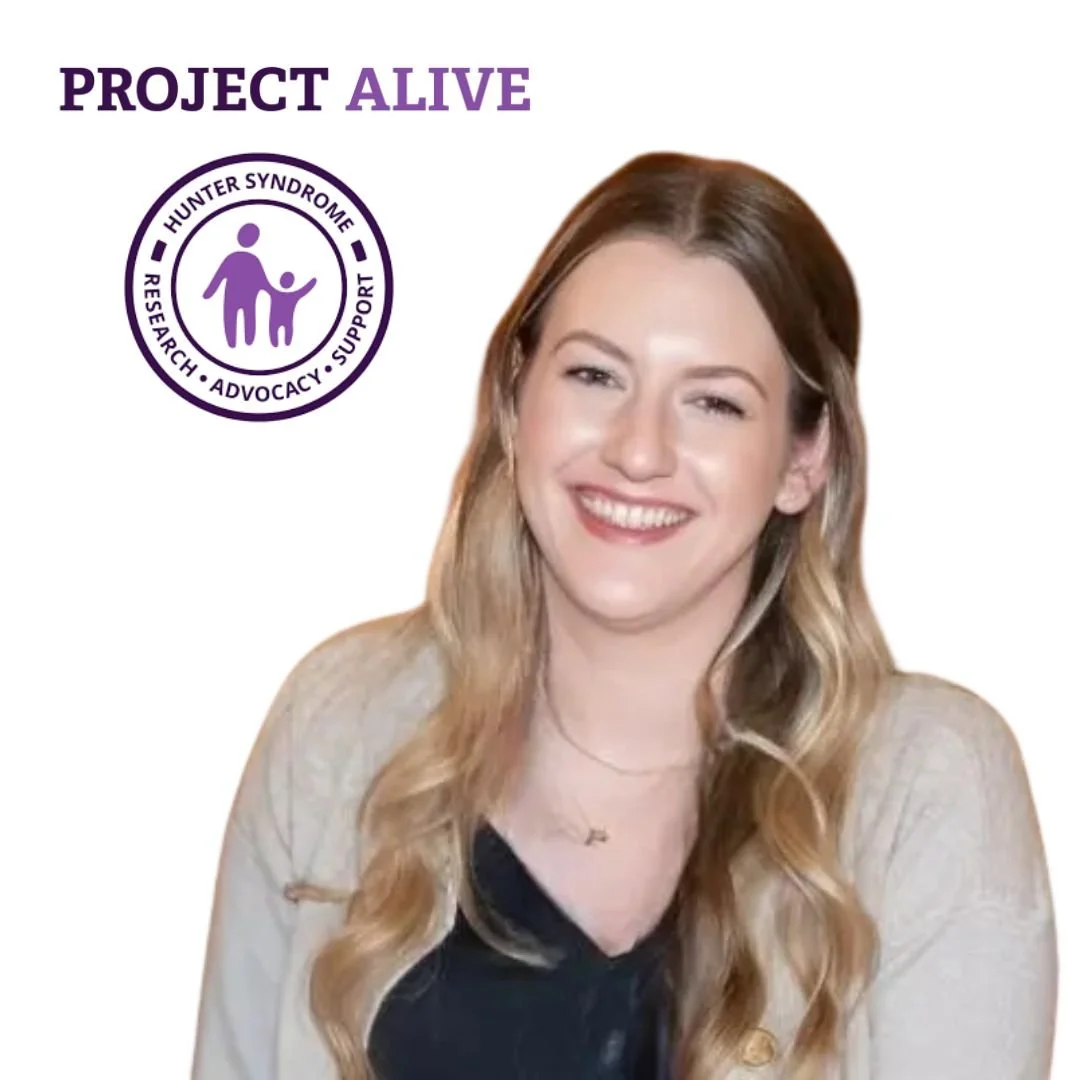
Our guest is Kristin McKay, Executive Director of Project Alive, a nonprofit organization dedicated to accelerating treatments, expanding access to care, and supporting families impacted by Hunter syndrome. Kristin’s advocacy is deeply personal: she lost her brother, Zachary, to Hunter syndrome, and today her son, Charlie, is living with the condition.
Kristin joins us to share what Hunter syndrome is, how it progresses, and how her family’s journey shaped her leadership and advocacy. We discuss the urgent need for effective treatments, the promise and uncertainty surrounding emerging gene therapies, and what families experience when regulatory delays impact a disease where time is not a luxury.
This conversation highlights both the science behind Hunter syndrome and the human cost of delay, along with the resilience of a community that continues to push forward fueled by hope.
On This Episode, We Discuss:
Understanding Hunter Syndrome (MPS II)
What it means to have a metabolic disorder and how MPS II affects the body
Common symptoms and how the disease progresses over time
The variability in presentation and severity among individuals
A Family’s Journey Through Hunter Syndrome
Kristin’s experiences growing up with a brother affected by Hunter syndrome
Losing Zachary and later receiving the diagnosis for her son, Charlie
How these experiences shaped her perspective as both a parent and an advocate
Project Alive: Mission, Growth & Impact
The origins and mission of Project Alive
Key initiatives supporting research, families, and advocacy
How the organization balances funding science, supporting families, and influencing policy
Gene Therapy & the RGX-121 Delay
Why RGX-121 is considered a promising potential one-time gene therapy for Hunter syndrome
What the FDA’s Prescription Drug User Fee Act (PDUFA) date extension means for patients and families
The emotional and practical impact of regulatory delays in ultra-rare diseases
What changes could help expedite review processes for rare disease therapies
Advocacy, Equity & Access
How Project Alive amplifies the voices of a small but urgent patient community
Strategies for engaging policymakers and industry partners
Lessons the broader rare disease field can learn from this advocacy model
Looking Ahead & How You Can Help
What listeners can do to support Project Alive
Opportunities for advocacy, awareness-building, and community engagement
Relevant Resources:
MedlinePlus’ Mucopolysaccharidosis type II (Hunter syndrome) Page
The Orphan Drug Act 1983 strongly influenced by The National Organization for Rare Disorders (NORD)
Royalty pens $275M financing deal for Denali drug awaiting delayed FDA decision
FDA pushes back PDUFA date for Regenxbio's Hunter syndrome gene therapy
A Phase III Study of JR-141 in Patients With Mucopolysaccharidosis II (STARLIGHT)
FDA News Release: FDA Advances Rare Disease Drug Development with New Evidence Principles
Morimoto H, Morioka H, Imakiire A, Yamamoto R, Hirato T, Sonoda H, Minami K. Dose-dependent effects of a brain-penetrating iduronate-2-sulfatase on neurobehavioral impairments in mucopolysaccharidosis II mice. Mol Ther Methods Clin Dev. 2022 May 10;25:534-544. doi: 10.1016/j.omtm.2022.05.002. PMID: 35662814; PMCID: PMC9142692.
The Precision Medicine Initiative launched by President Obama
It Happened To Me Podcast Episode #16 ALS with Brook Eby (Kira referred to this being a DNA Today episode, she misremembered doing an episode drop on DNA Today, but maybe that means we should in the future)
STAT News: 1 in 10 Americans have a rare disease, but few have treatments
Kim, Esther and Lo, Andrew W., Venture Philanthropy: A Case Study of the Cystic Fibrosis Foundation (April 23, 2019). Available at SSRN: https://ssrn.com/abstract=3376673 or http://dx.doi.org/10.2139/ssrn.3376673
Researchers estimated that 42% of Americans over age 55 will eventually develop dementia.
NIH research (lead by Dr. Francis Collins) leads to first FDA-approved treatment for progeria
Relevant DNA Today Podcast Episode:
#306 NIH’s Dr. Francis Collins’ Leadership in the Human Genome Project and COVID-19
#332 Building Stronger Rare Disease Organizations: NORD CEO’s Insight
#356 From Statehouse to Capitol Hill: A Guide to Effective Advocacy for Rare Diseases
#370 Genetics Wrapped: 2025 Top Advances in Genomic Medicine
#371 Growing Old Too Fast: A Mother’s Fight for Cockayne Syndrome Advocacy
Get ready, genetic nerds, another brand-new episode of DNA Today drops this Friday! You can always count on us to deliver fresh content every Friday.
While you wait, why not dive into our library of over 370 episodes? Binge them all on Apple Podcasts, Spotify, our website, or wherever you love to listen, search “DNA Today.”
Prefer watching? We’ve got you covered! For the past four years, we’ve been recording episodes with video, including some filmed at the iconic NBC Universal Stamford Studios. Check them out on our YouTube channel!
DNA Today is hosted and produced by Kira Dineen, MS, LCGC, CG(ASCP)CM . Our Video Lead is Amanda Andreoli. Our Social Media Lead Liv Davidson. And our logo Graphic Designer is Ashlyn Enokian, MS, CGC.
See what else we are up to on Instagram, X (Twitter), BluSky, Threads, LinkedIn, Facebook, YouTube and our website, DNAToday.com. Questions/inquiries can be sent to info@DNAtoday.com.