#396 Gene Therapy for Anxiety? Precision Psychiatry through CRISPR & RN
Anxiety is one of the most common mental health conditions, but for many people, it can also feel deeply isolating. Current treatments such as therapy, SSRIs, and benzodiazepines can be life-changing, but they do not work for everyone, and they often manage symptoms rather than addressing the underlying biology of anxiety.
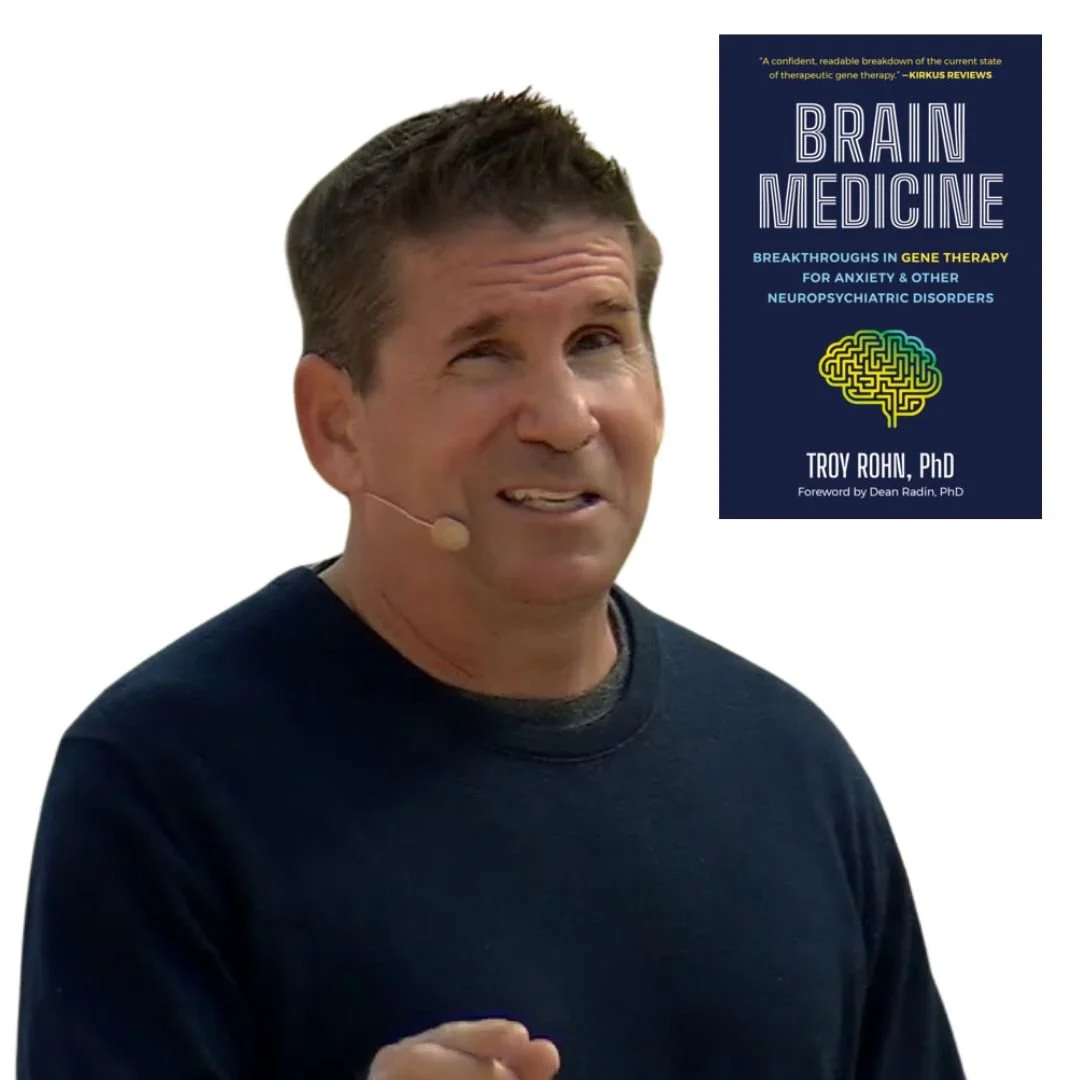
In this episode of DNA Today, host Kira Dineen is joined by Dr. Troy Rohn, neuroscientist, professor at Boise State University, and Co-founder and Director of Preclinical Studies at Cognigenics. Dr. Rohn is also the author of Brain Medicine: Breakthroughs in Gene Therapy for Anxiety & Other Neuropsychiatric Disorders, a brand new book exploring how CRISPR, RNA interference, neurogenetics, and precision psychiatry could reshape the future of mental health treatment.
We take a deeply personal and scientific look at anxiety. Dr. Rohn shares how his own experiences with chronic anxiety and PTSD helped inspire his work, while also explaining the brain biology behind anxiety, including the roles of serotonin, GABA, the amygdala, hippocampus, insula, and thalamus.
A major focus of the episode is the 5-HT2A serotonin receptor, produced through the HTR2A gene, and why this receptor has become an important target in Dr. Rohn’s preclinical research. Kira and Dr. Rohn explore how today’s treatments broadly influence serotonin signaling, while emerging gene-based approaches may someday allow researchers to more precisely reduce or silence specific pathways involved in anxiety.
The episode also breaks down the difference between CRISPR gene editing and RNA interference, including why reversibility, safety, off-target effects, and long-term consequences matter so much when discussing potential therapies for the brain. Dr. Rohn also explains one of the biggest challenges in the field: getting therapies across the blood-brain barrier.
Because this science is still preclinical, the conversation also focuses on how to talk about hope responsibly. Could gene therapy someday help treat anxiety at its source? Possibly. But there are major scientific, regulatory, ethical, and access questions that need to be answered before these approaches could become part of clinical care.
In This Episode, We Discuss:
The lived experience of anxiety, PTSD, and chronic hypervigilance
Why anxiety is shaped by both genes and environment
How current anxiety treatments work, including SSRIs, benzodiazepines, CBT, and service animals
Why SSRIs can help some people but fall short for others
The role of serotonin, GABA, and brain circuits in anxiety
What the 5-HT2A receptor is and why it matters
How the HTR2A gene leads to production of the 5-HT2A receptor protein
The difference between broadly changing serotonin levels and targeting a specific receptor pathway
How CRISPR could be used to make more permanent DNA changes
How RNA interference could offer a more temporary or reversible way to reduce gene expression
What preclinical animal studies can and cannot tell us
Why the blood-brain barrier is such a major challenge for brain-targeted therapies
Ethical questions around using gene therapy for mental health conditions
How to balance scientific excitement with caution and realistic expectations
Guest Bio
Dr. Troy Rohn is a neuroscientist, professor at Boise State University, and Co-founder and Director of Preclinical Studies at Cognigenics. His research has focused on neurological disorders, including Alzheimer’s disease, anxiety, and memory impairment. In his book Brain Medicine: Breakthroughs in Gene Therapy for Anxiety & Other Neuropsychiatric Disorders, Dr. Rohn explores how gene therapy, CRISPR, RNA interference, and precision psychiatry could open new possibilities for treating anxiety and other brain-based conditions.
About the Book
Brain Medicine: Breakthroughs in Gene Therapy for Anxiety & Other Neuropsychiatric Disorders explores the future of mental health treatment through the lens of gene therapy and neurogenetics. Blending personal story with neuroscience, Dr. Troy Rohn examines how technologies like CRISPR and RNA interference may one day allow researchers to target anxiety-related pathways with greater precision than current medications.
The book also addresses the scientific and ethical complexities of this field, including safety, access, regulatory approval, the blood-brain barrier, and the challenge of moving from promising preclinical research to human clinical trials.
Key Terms
5-HT2A receptor: A serotonin receptor involved in brain signaling, mood, perception, cognition, and emotional processing.
HTR2A gene: The gene that provides instructions for making the 5-HT2A serotonin receptor.
SSRI: Selective serotonin reuptake inhibitor, a class of medications commonly used to treat anxiety and depression by increasing serotonin availability in the brain. Examples are Lexapro, Zoloft, Prozac, Paxil, among others.
CRISPR: A gene-editing technology that can be used to make targeted changes to DNA.
RNA interference: A process that can reduce or silence gene expression by targeting RNA before a protein is made.
Blood-brain barrier: A protective barrier that helps regulate what substances can enter the brain from the bloodstream, making delivery of brain-targeted therapies especially challenging. Blood-brain border might be a more accurate and helpful term as some molecules are allowed past.
Precision psychiatry: An emerging approach that aims to tailor mental health treatment based on a person’s biology, genetics, symptoms, and lived experience.
Resources & Links:
Relevant DNA Today Podcast Episode:
#198 CRISPR Ethics with Sam Sternberg
#288 CRISPR Cured Victoria Gray’s Sickle Cell: Part 1
#289 CRISPR Cured Victoria Gray’s Sickle Cell: Part 2
#304 HBO’s “Six Schizophrenic Brothers” Sister and Advocate Lindsay Mary Galvin Rauch
#343 The First Child to Receive CRISPR for Duchenne? A Father’s Fight for a Cure
#354 How Pharmacogenomics is Revolutionizing Drug Prescriptions
Connect With Us:
Luckily you don’t have to wait long for a brand-new episode of DNA Today, we drop episodes every Friday! Until then, why not dive into our library of over 395 episodes? Binge them all on Apple Podcasts, Spotify, our website, or wherever you love to listen, just search “DNA Today.”
Prefer watching? We’ve got you covered! The video component of this episode is available on our YouTube channel and website. Some of these episodes were filmed at our home studio, the iconic NBC Universal Stamford Studios.
DNA Today is hosted and produced by Kira Dineen, MS, LCGC, CG(ASCP)CM . Our Social Media Lead is Liv Davidson. Our Digital Marketing and Automation Lead is Eric Knaus. And the Graphic Designer of our logo is Ashlyn Enokian, MS, CGC.
See what else we are up to on Instagram, X (Twitter), BluSky, Threads, LinkedIn, Facebook, YouTube and our website, DNAToday.com. Questions/inquiries can be sent to info@DNAtoday.com.