#386 Achondroplasia Beyond Height: Managing Lifelong Medical Needs
What does it mean to truly care for a child with achondroplasia beyond just their growth differences? Achondroplasia is the most common form of skeletal dysplasia, but it is so much more than height. Children and adults with achondroplasia can have medical complications that require lifelong monitoring and the need for lifelong multidisciplinary care.
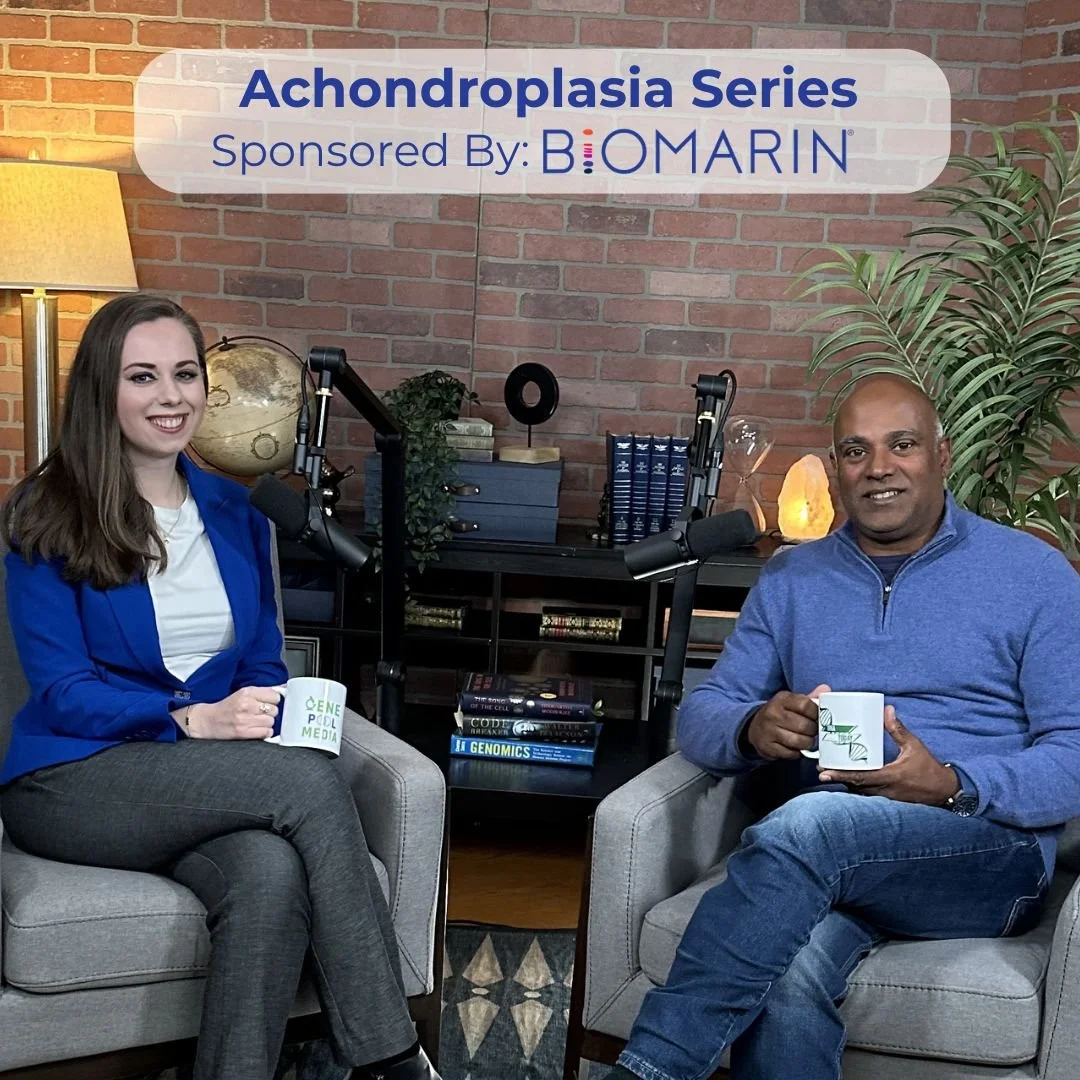
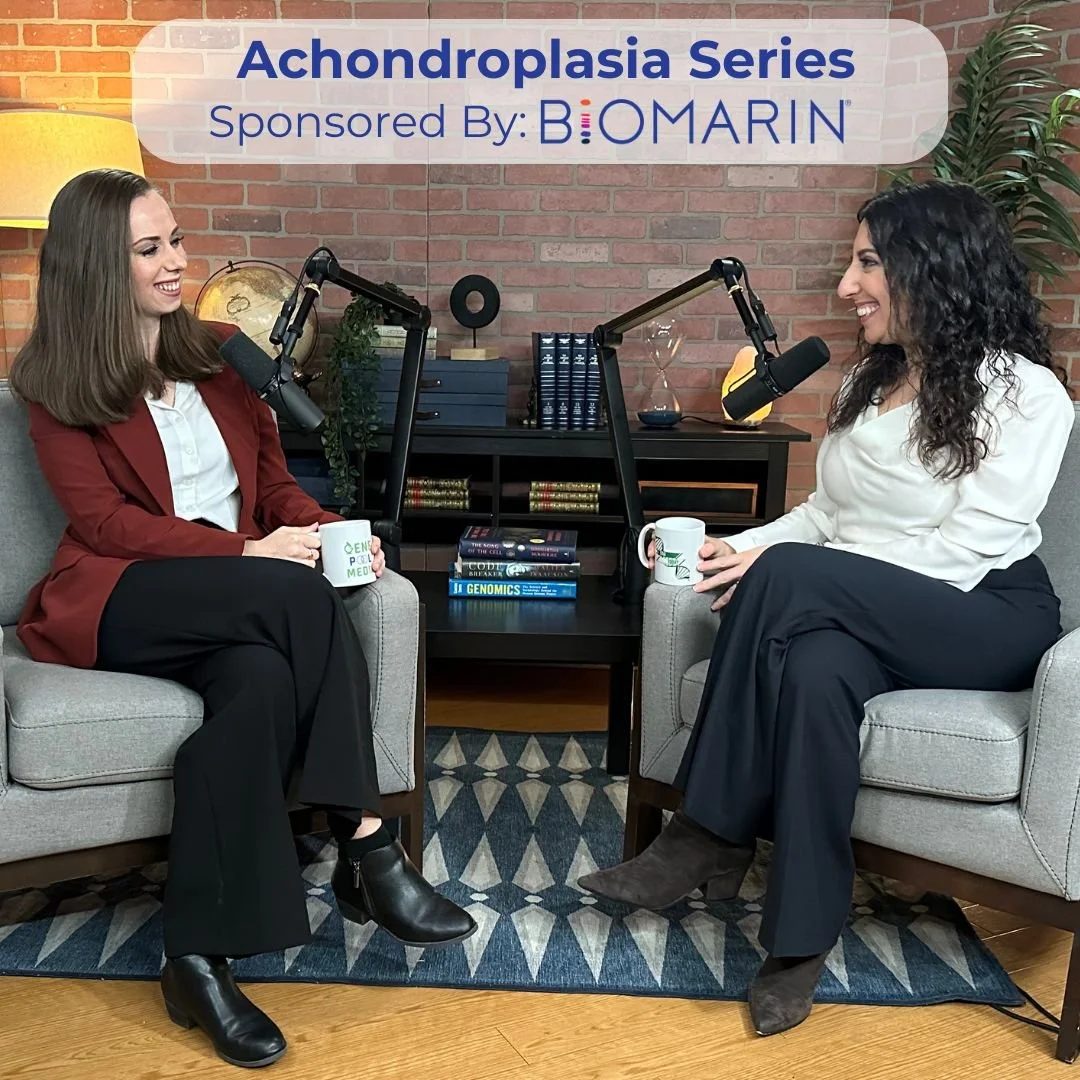
This is the second episode in our three-part series on achondroplasia, sponsored by BioMarin. In our first episode, (Episode 359 of DNA Today) Dr. Janet Legare helped us explore the basics of achondroplasia and the role of genetics in diagnosis and family counseling. In this conversation, we’re shifting the focus to what living with achondroplasia actually looks like day to day, from managing medical complications to coordinating care across multiple specialties.
Joining us is Dr. Ricki Carroll, a complex care and palliative care physician on the multidisciplinary skeletal dysplasia team in Delaware. Dr. Carroll brings expertise in providing a medical home for children with skeletal dysplasias, with a special focus on pain and symptom management. She also co-leads a skeletal dysplasia consultative service, and her training in bioethics adds a unique perspective on delivering compassionate, individualized care.
In This Episode, We Discuss
Building a Medical Home
What a “medical home” means for children with achondroplasia
Common concerns families raise after a new diagnosis, beyond height
Supporting families early while planning for long-term care
Co-Morbidities & Clinical Complications
Key conditions clinicians should monitor in infants and children, including:
Foramen magnum stenosis
Hydrocephalus
Sleep apnea
ENT issues like recurrent ear infections and hearing loss
Orthopedic challenges such as kyphosis, spinal stenosis, and bowed legs
How chronic pain presents and is managed across childhood and adulthood
Living With Achondroplasia
How medical needs evolve from childhood into adolescence and adulthood
The role of fatigue, mobility limitations, and accessibility in daily life
Balancing medical care with childhood independence and normalcy
Under-recognized burdens that significantly affect patients and families
Multidisciplinary Care in Practice
What a full skeletal dysplasia care team looks like
How palliative care supports symptom management, decision-making, and quality of life
Coordinating care across specialties like orthopedics, neurosurgery, ENT, and audiology
Preventing communication breakdowns between providers
Helping families navigate complex choices around interventions and surgeries
Looking Ahead
Gaps in current care models for achondroplasia
How emerging treatments are changing long-term planning conversations
Key takeaways for providers who may only occasionally care for patients with achondroplasia
Our Guest Dr. Ricki Carroll:
Dr. Ricki Carroll is a complex care and palliative care physician on the skeletal dysplasia and palliative care teams at a hospital in Delaware. Dr. Carroll works to provide a medical home and manage care for children with a wide array of skeletal dysplasias. Her background in palliative medicine allows her to focus on pain and symptom management needs for these children, teens and young adults. Dr. Carroll also leads the skeletal dysplasia consultative service, providing care for infants and children with skeletal dysplasias who are in the hospital. Additionally, drawing upon her Master’s in Bioethics, she is currently serving as co-Chair of an Ethics and Patients’ Rights Committee.
Achondroplasia Resources:
Ireland PJ, Johnson S, Donaghey S, Johnston L, McGill J, Zankl A, Ware RS, Pacey V, Ault J, Savarirayan R, Sillence D, Thompson E, Townshend S. Developmental milestones in infants and young Australasian children with achondroplasia. J Dev Behav Pediatr. 2010 Jan;31(1):41-7. doi: 10.1097/DBP.0b013e3181c72052. PMID: 20081435.
Julie Hoover-Fong, Charles I. Scott, Marilyn C. Jones, COMMITTEE ON GENETICS, Emily Chen, Tracy L. Trotter, Susan A. Berry, Leah W. Burke, Timothy A. Geleske, Rizwan Hamid, Robert J. Hopkin, Wendy J. Introne, Michael J. Lyons, Angela Scheuerle, Joan M. Stoler; Health Supervision for People With Achondroplasia. Pediatrics June 2020; 145 (6): e20201010. 10.1542/peds.2020-1010
Nadia Merchant, Julie Hoover-Fong, Ricki S Carroll, Approach to the Patient with Achondroplasia—New Considerations for Diagnosis, Management, and Treatment, The Journal of Clinical Endocrinology & Metabolism, Volume 110, Issue 7, July 2025, Pages e2309–e2316, https://doi.org/10.1210/clinem/dgaf017
Relevant Skeletal Dysplasia DNA Today Episodes:
Be on the lookout for our third and final episode in this series about achondroplasia sponsored by BioMarin.
Connect With Us:
Luckily, you don’t have to wait long for a brand-new episode of DNA Today, we drop episodes every Friday! Until then, why not dive into our library of over 375 episodes? Binge them all on Apple Podcasts, Spotify, our website, or wherever you love to listen, just search “DNA Today.”
Prefer watching? We’ve got you covered! For the past four years, we’ve been recording episodes with video, including some filmed at the iconic NBC Universal Stamford Studios. Check them out on our YouTube channel!
DNA Today is hosted and produced by Kira Dineen, MS, LCGC, CG(ASCP)CM . Our Social Media Lead Liv Davidson. And our logo Graphic Designer is Ashlyn Enokian, MS, CGC.
See what else we are up to on Instagram, X (Twitter), BluSky, Threads, LinkedIn, Facebook, YouTube and our website, DNAToday.com. Questions/inquiries can be sent to info@DNAtoday.com.